

论文发表
12. Shanshan Chen, Xiao-Rong Wen, Wen-Jun Xie, Haoxiang Sun, Fang-Yu Ren*, Hong-Ru Li*, Liang-Nian He*. Bidirectional Electronic Modulation within Cu2O Lattice for Ampere-Level CO2 Electroreduction to Ethylene. Adv. Mater., 2026, 38, e75201. [Link]
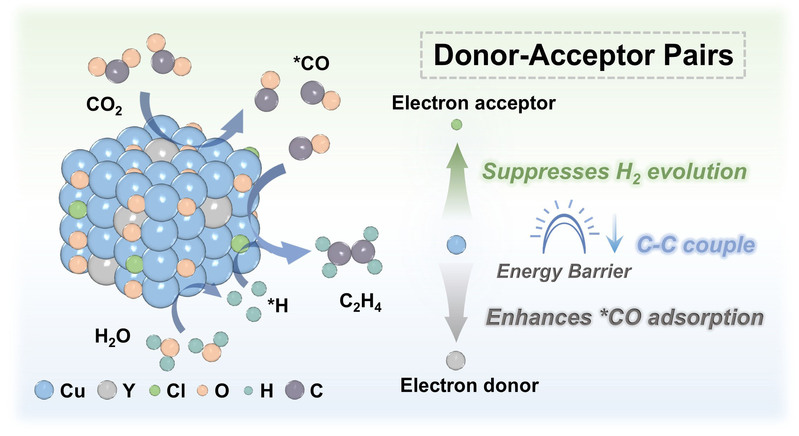
Abstract: Electrochemical CO2 reduction to ethylene requires Cu sites that simultaneously enrich carbon intermediates, promote C–C coupling, and suppress hydrogen evolution at high current density. Heteroatom doping is widely used to tune Cu-based catalysts. However, conventional single-dopant strategies typically impose either electron donation or electron withdrawal, limiting their ability to balance these coupled interfacial processes. Herein, a Y single-atom and Cl co-modified Cu2O catalyst (Y0.19-Cu2O-Cl) is developed to create lattice-confined donor–acceptor pairs for bidirectionally modulating Cu electronic states. Formation energy calculations prove the favorable thermodynamics of Y–Cl co-doping configuration. HAADF-STEM, XPS, and XAS support atomically dispersed Y, retained Cl-containing species, and coupled charge redistribution within the Cu2O-derived matrix. In situ Raman/ATR-SEIRAS and density functional theory calculations reveal that Y favors *CO enrichment, whereas Cl modifies hydrogen adsorption; the two dopants synergistically regulate Cu+ active sites and lower the C–C coupling energy barrier from 0.75 to 0.39 eV. Consequently, the catalyst achieves an FEC2H4 of 62.5% at 656.6 mA cm−2 and maintains higher ethylene selectivity than the singly modified controls, establishing donor–acceptor electronic pairing as a strategy for industrial-grade current densities for CO2 electroreduction.
11. Man Zhao, Wen-Jun Xie, Shan-Shan Chen, Hong-Ru Li, Liang-Nian He*. Rationally designed aluminum-supported g-C3N4: An efficient and halogen-free catalyst for CO2-epoxide cycloaddition. J Environ Chem Eng 2026, 14, 124372.[Link]
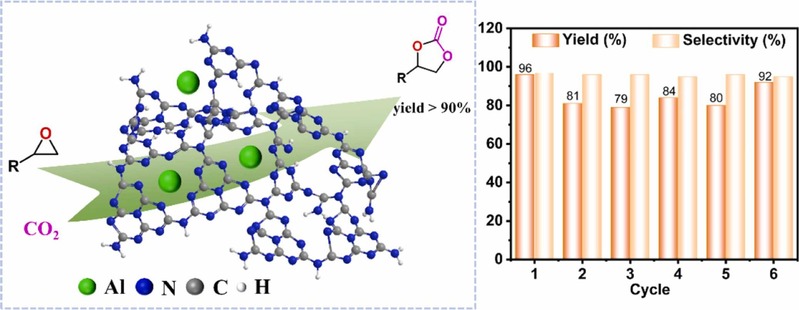
Abstract: The cycloaddition of CO2 with epoxides offers an atom-economical pathway to produce cyclic carbonates, wherein the catalyst plays a pivotal role in determining reaction efficiency. In this work, aluminum-supported g-C3N4 (Al@g-C3N4) was prepared via a facile impregnation method. This catalyst exhibited superior activity in the cycloaddition of epoxides and CO2 in the absence of any external nucleophilic co-catalyst, delivering excellent yields under optimized conditions (150 °C, 5atm CO2, 8h), with pronounced reactivity observed for monosubstituted epoxides. Moreover, the catalyst exhibited good recyclability, retaining its structural integrity and consistent activity over five consecutive cycles without discernible metal leaching. Structural characterization revealed that aluminum ions were stabilized through coordination with nitrogen atoms in the g-C3N4 matrix, thereby constructing surface acid-base pairs analogous to frustrated Lewis pairs. These adjacent acid-base sites can synergistically activate the epoxide and CO2, facilitating the cycloaddition reaction under halogen-free conditions. This work presents a promising strategy for engineering high-performance catalysts via metal ion coordination on g-C3N4, underscoring a sustainable pathway for CO2 valorization.
10. Xin-Yi Yang , An-Guo Wu , Fang-Yu Yu , Li-Feng Xu , Guang-Rui Liu , Hong-Ru Li , Liang-Nian He*. Industrial solid waste-based sorbents for high-temperature CO2 capture and conversion. Green Chem. Eng.,
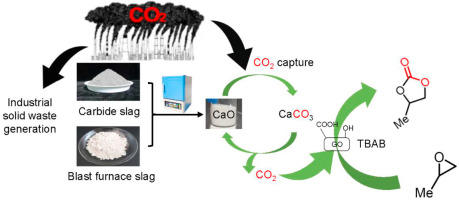
Abstract:In this work, a “CO2 capture and ex situ utilization” strategy was proposed by combining calcium looping and a subsequent cycloaddition reaction. In the calcium looping step, the CaO-based sorbent was prepared from bulk industrial solid waste, i.e., carbide slag as the calcium source and blast-furnace slag as the dopant. Both wet mixing and sol-gel methods were explored in this study. Among them, the sorbent synthesized via the sol-gel route with sucrose as a complexing agent showed improved cyclic performance. This improvement is presumably attributable to the sol-gel method's ability to enhance the distribution of blast furnace slag and optimize the sorbent's pore structure. By further regulating sorbent preparation parameters such as the mass ratio of carbide slag to blast furnace slag, the sucrose amount, and the calcination temperature and time, the optimal sorbent was obtained with an initial CO2 uptake of 0.552 g CO2/g sorbent at 740 oC. Furthermore, the CO2 uptake was still retained at 92% even after 10 cycles. The CO2 released from Ca-looping ex situ reacted with propylene oxide (PO) to afford a 91% yield of propylene carbonate catalyzed by graphene oxide (GO) and tetrabutylammonium bromide (TBAB), avoiding conventional CO2 compression and transportation. As expected, this study represents a potential large-scale application of integrating industrial solid waste management, carbon capture, and valorization to value-added chemicals and materials.
9. Xiao-Rong Wen, Xin-Yi Chen, Shan-Shan Chen, Chao-Yang Jing, Wen-Jun Xie, Hong-Ru Li, Liang-Nian He*. Modulation of Local Electronic Structure in Double-Shell Hollow Cu2O via Pyridyl Ligands for Efficient CO2-to-Ethylene Conversion. Chem. Eur. J.,2026; 32, e71617. [Link]
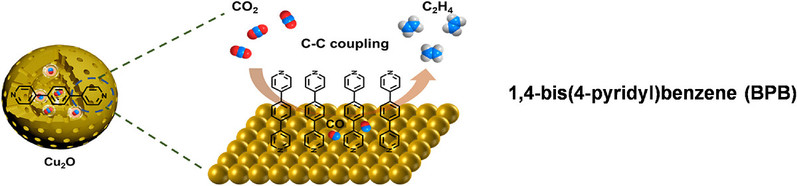
Abstract:The electrochemical reduction of CO2 to ethylene (C2H4) offers an attractive route for carbon valorization to bulk chemicals by using sustainable energy. However, its practical application is hindered by sluggish C─C coupling kinetics and poor C2H4 selectivity at high current densities. While hollow-structured Cu2O can enrich *CO intermediates, further enhancing C─C coupling on such structures remains challenging. In this context, we developed a ligand modulation strategy to tailor the catalytic properties of double-shell hollow Cu2O by anchoring π-conjugated 1,4-bis(4-pyridyl)benzene (BPB) onto the Cu2O surface via Cu─N coordination bonds. Concentration‑dependent studies identify 10 mM BPB as the optimal balance between electronic modulation and surface accessibility. In situ ATR‑SEIRAS and density functional theory calculations collectively demonstrate that the electron donation from pyridinic N donors to Cu+ sites promotes CO2 activation and *COOH formation, while the strengthened *CO adsorption is expected to facilitate C─C coupling. As a result, the optimized Cu2O-BPB-10 catalyst delivered a C2H4 Faradaic efficiency (FE) of 61.6% and a total C2+ FE of 85.1% at a current density of 600 mA cm−2. This work provides a facile and versatile ligand engineering strategy for designing high-performance Cu-based catalysts for practical electrochemical CO2 reduction under industrially relevant conditions.
8. Si-Shun Yan, Chaorong Qi, Yong-Yuan Gui, Hong-Ru Li, Yanwei Wang, Wei Zhang, Lei Song, Wenfang Xiong, Jian-Heng Ye*, Youai Qiu*, Wenzhen Zhang*, Huanfeng Jiang*, Xiao-Bing Lu*, Liang-Nian He* & Da-Gang Yu*. Recent advances in organic synthesis with CO2. Sci China Chem, 2026, 69, 4151–4222. [Link]
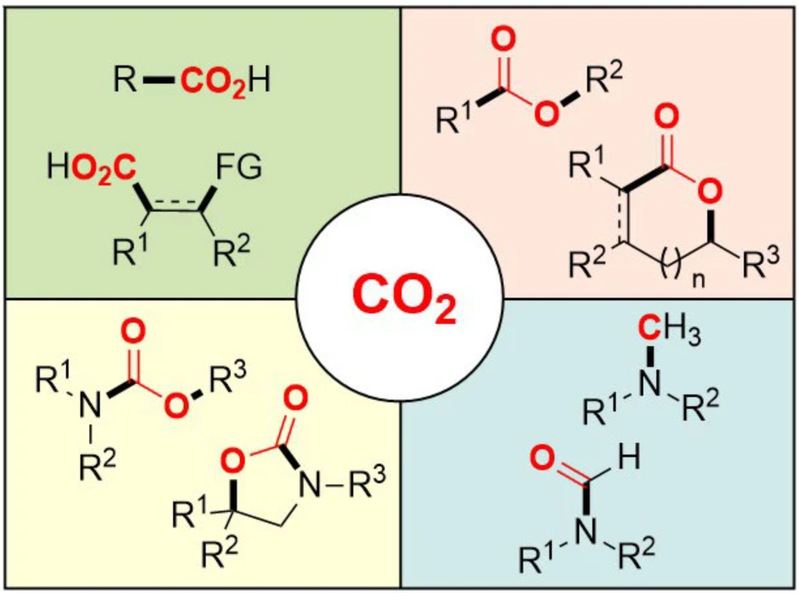
Abstract: As an abundant and renewable C1 source, CO2-involved organic synthesis stands for green and sustainable chemical transformations, which have been well developed in the past decades. Diverse reactions are realized via C–X (X=C, N, O) bond formation, providing various organic compounds with high selectivity and efficiency. In recent years, a variety of novel organic transformations with CO2 have emerged under different reaction systems, especially with the renaissance of photochemistry and electrochemistry. This review will summarize the advances in CO2-involved organic synthesis in the past five years. The content is organized based on the chemical bond formation in the organic transformation with CO2, mainly including C–C bond, C–N bond, and C–O bond formation.
7. 刘观焕,刘广睿,李红茹,何良年*. 非均相催化以胺/芳烃为底物的CO2还原功能化研究进展. 洁净煤技术,2026, 32, 120−136. [Link]
摘要:CO2还原功能化反应将CO2还原和C—X键的形成相偶联,从而将CO2以甲酰基、甲基等形式引入有机分子,极大地扩展了CO2转化可获得的产物范围。其中非均相催化以胺类化合物或芳香烃为底物、H2为还原剂的CO2还原功能化反应,有望用于工业规模甲酰胺、甲基胺和甲基芳烃等重要化学品的生产,因而是近年来的研究热点。在以胺类化合物为底物的CO2还原功能化反应中,常采用Pd、Au、Pt、Ru、Re、Ir、Cu和Co等金属纳米材料,通过载体种类及载体表面官能团修饰、有机配体或金属氧化物修饰金属纳米颗粒以及形成合金等策略,有效调控活性金属中心的电子结构并在载体上引入多个活性位点,提高金属中心对H2的活化能力以及催化剂对CO2、胺类底物以及还原功能化中间体的吸附活化能力,从而提高催化剂活性和稳定性并调控N−甲酰化和N−甲基化产物选择性。对于以芳香烃为底物的CO2还原功能化反应,则采用金属混合氧化物或Re/TiO2与分子筛组成的双功能催化剂,其中金属混合氧化物或Re/TiO2将CO2还原至甲醇,而分子筛中的酸性位点则活化甲醇和芳香烃并促进C—C偶联,形成甲基化产物。通过调控金属混合氧化物的组成、分子筛的种类以及分子筛中酸性位点的种类、密度和分布,优化混合氧化物和分子筛的混合比例和混合方式等策略,能有效提高CO2催化加氢和芳香烃甲基化效率,并使甲醇生成、迁移和消耗速率相匹配,从而提高原料转化率和目标产品选择性;目前,CO2和芳香烃的转化率达到30%以上,产物选择性超过90%。目前,CO2还原功能化反应在非均相催化剂设计和产物调控方面积累了系统的研究成果,为后续技术革新与应用奠定了坚实基础。
6. 王伟佳, 姜华昌, 祝巨, 何良年, 基于新工科背景下的有机化学教学“新模式”探索与实践。大学化学. 2026, 41, 288. [Link]
摘要: 在新工科背景下,传统有机化学教学面临诸多挑战。本文提出五类教学“新模式”的探索与应用:1) 差异化翻转课堂;2) 真实性项目化学习;3) 竞赛式学习;4) 模块化教学;5) 网络辅助教学。通过案例阐释实施路径,强调有机化学课堂模式创新与改革,旨在有效激发学生学习兴趣,培养能够应对复杂工程问题的高素质复合型人才。
5. Alexander O. Ustyuzhanin, Polina A. Podgornaia, Natalia G. Kolotyrkina, Liang-Nian He, Vera A. Vil’*, Alexander O. Terent’ev* Selective Electrochemical Hydrocarboxylation of Vinyl Phosphonates with CO2 Enabled by Alternating Polarity. Adv. Synth. Catal., 2026, 368, e70559. [Link]
Abstract: Electrochemical hydrocarboxylation of vinyl phosphonates with CO2 to form carboxylic-substituted phosphonates is developed. The alternating polarity affords a boost in Faraday efficiency and enables generalizable catalytic control to provide high product yields over a broad substrate scope by maintaining electrode activity through the regeneration of its surface. The disclosed method provides high selectivity of the target hydrocarboxylation without side transformations of vinyl phosphonates in an undivided cell affording a short way to valuable carboxylic acids featuring a phosphonate fragment. The high selectivity of hydrocarboxylation is achieved through the integration of an alternating polarity strategy with an efficient sequence of one-electron reduction, followed by C-C bond formation, subsequent second one-electron reduction, and protonation. These results establish the utility of the alternating polarity technique and provide a foundation for its adaptation to other electrochemical reactions.
4. Xiao-Rong Wen, Shan-Shan Chen, Wen-Jun Xie, Hong-Ru Li, Liang-Nian He*, Cavity-confined Cu2O nanoreactors for efficient CO2 electroreduction to ethylene. J Catal, 2026, 455, 116710. [Link]
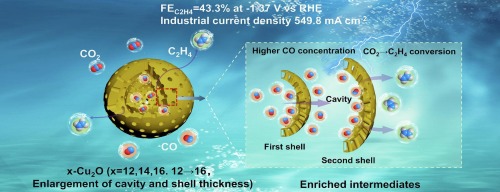
Abstract: Electrocatalytic carbon dioxide reduction (eCO2R) to ethylene (C2H4) offers a promising pathway toward carbon–neutral cycles and sustainable chemical synthesis. In eCO2R to C2H4, copper-based electrocatalysts, particularly Cu2O, have been widely used. Nevertheless, product selectivity to C2H4 is still quite limited due to the insufficient enrichment of key intermediates and slow C–C coupling kinetics. Herein, the double-shelled hollow mesoporous Cu2O was fabricated through the soft-templating method. And the cavity size and pore architecture of the resulting Cu2O catalysts could be precisely tailored by adjusting the alkyl chain length of the surfactant templates alkyltrimethylammonium bromides. When applied to eCO2R, the as-prepared Cu2O material with tetradecyltrimethylammonium bromide (TTAB) as template exhibited a remarkable Faradaic efficiency of 43.3 ± 0.8% for C2H4 at an industrial-level current density of 549.8 mA cm−2. Experimental and theoretical investigations reveal that its high activity and selectivity toward C2H4 stem from the suitable cavity configuration, which enriches key *CO intermediates and promotes their dimerization via a spatial confinement effect. This study provides valuable insights into the architectural design of efficient catalysts for CO2-to-C2H4 conversion.
3. Li-Feng Xu, Wen-Jun Xie, Shan-Shan Chen, Alexander O. Terent'ev,c Hong-Ru Li* and Liang-Nian He*. Direct synthesis of cyclic carbonates from olefins and CO2 via ionic liquid catalysis with mutually promoting bifunctional groups. Green Chem.,2026, DOI: 10.1039/D5GC06239J. [Link]
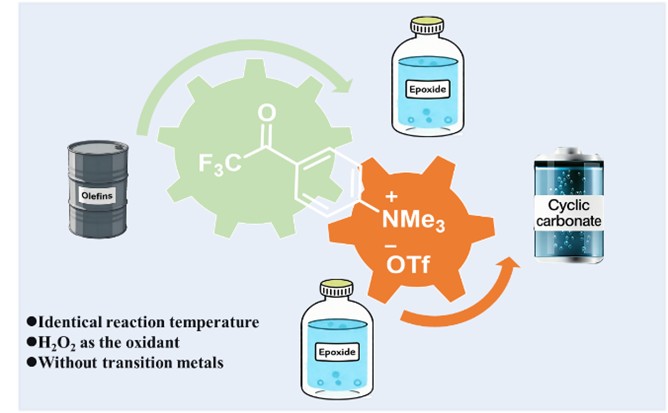
Abstract: The oxidative carboxylation of olefins is a thermodynamically and economically favorable strategy for the synthesis of cyclic carbonates. As a common oxidant, aqueous hydrogen peroxide solution serves as a cost-effective and green chemical. Herein, we develop a bifunctional ionic liquid, which has both the trifluoroacetyl group as the epoxidation reactive site and quaternary ammonium salt for promoting the cycloaddition reaction. The two active sites work synergistically through the electronic effect, thereby rendering two subsequent steps compatible and allowing the target reaction to proceed efficiently and selectively accordingly. The introduction of quaternary ammonium salt enhances the selectivity of epoxides at 80 °C. The trifluoroacetyl group augments the activating capability of the quaternary ammonium site toward epoxides and ultimately allows the cycloaddition reaction to proceed efficiently at a lower temperature. With hydrogen peroxide as the oxidant, the bifunctional ionic liquid catalyst facilitates a two-step process for the synthesis of cyclic carbonates from olefins and CO2 in high yield, reaching up to 90%, in the absence of any transition metal. This work provides a novel, green, and sustainable strategy for the oxidative carboxylation of alkenes to synthesize cyclic carbonates.
2. Lada A. Zaikina, Mikhail M. Doronin, Oleg O. Segida, Olga M. Mulina, Igor B. Krylov, Liang-Nian He and Alexander O. Terent'ev*.Synthesis of thiazoles from vinyl azides and xanthates under the action of an Mn(III)-oxidant. Org. Biomol. Chem., 2026, 24, 136. [Link]
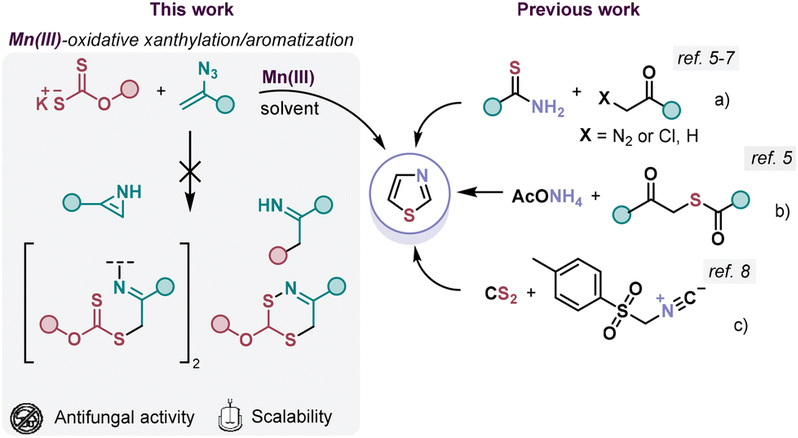
Abstract: Reaction of xanthates and vinyl azides under the action of Mn(OAc)3 results in the formation of alkoxy thiazoles. In this transformation, potassium xanthate undergoes Mn-mediated oxidation, generating the corresponding xanthyl radical. The latter interacts with the double bond of the vinyl azide, and after N2 elimination, a β-xanthylated iminyl radical is formed. The quenching of the iminyl radical by an Mn(II)-ion with subsequent cyclization into a 5-membered ring, an unexpected elimination of a sulfur-containing fragment and aromatization lead to thiazoles. It is important to mention that cyclization with the formation of a 6-membered ring is not observed in the disclosed process. The obtained thiazoles demonstrate antifungal activity surpassing that of commercially available fungicides.
1. Valerio D’ Elia*, Pichaya Pattanasattayavong, Liang-Nian He*. 4-Aminopyridines as Versatile “Noninterfering” Allies for CO2 Fixation. ChemCatChem 2026, 18, e01150. [Link]
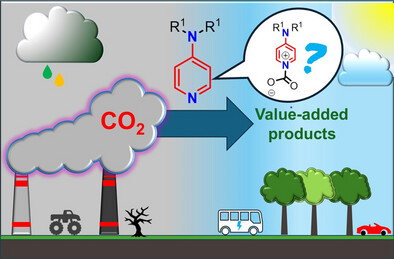
Abstract: Organic superbases are a family of compounds endowed with high nucleophilicity and basicity. Several powerful nucleophiles such as DBU (1,8-diazabicyclo[5.4.0]undec-7-ene), TBD (1,5,7-triazabicyclo[4.4.0]dec-5-ene), or DMAP (4-dimethylaminopyridine) are involved in CO2 conversion but their catalytic roles may differ from a mechanistic standpoint. In this work, we show the versatile application of 4-aminopyridines in CO2 fixation leading to products of CO2 reduction as well as cyclic carbonates and fine chemicals. In such cases, 4-aminopyridines serve not just as organocatalysts, but as recurring motifs performing as bases, structural components, ligands for electronic modulation of metals and full-fledged catalytic components. Such roles are highlighted herein with an eye to the understanding of mechanistic aspects and the interaction between 4-aminopyridines and CO2 through the discussion of several catalytic studies.
专利申请和授权
3. 赵满,李红茹,何良年,一种离子型金属salen交联聚合物催化剂及其制备方法与应用,申请号:202611031099.0
2. 张明,陈珊珊,李红茹,何良年,一种废弃聚氯乙烯塑料和二氧化碳共利用制备环状碳酸酯的方法,申请号: 2026108937833
1. 陈珊珊,许立锋,李红茹,何良年,一种双功能离子液体催化烯烃氧化羧化合成环状碳酸酯的方法 ,专利号:ZL 2025 1 1707838.9